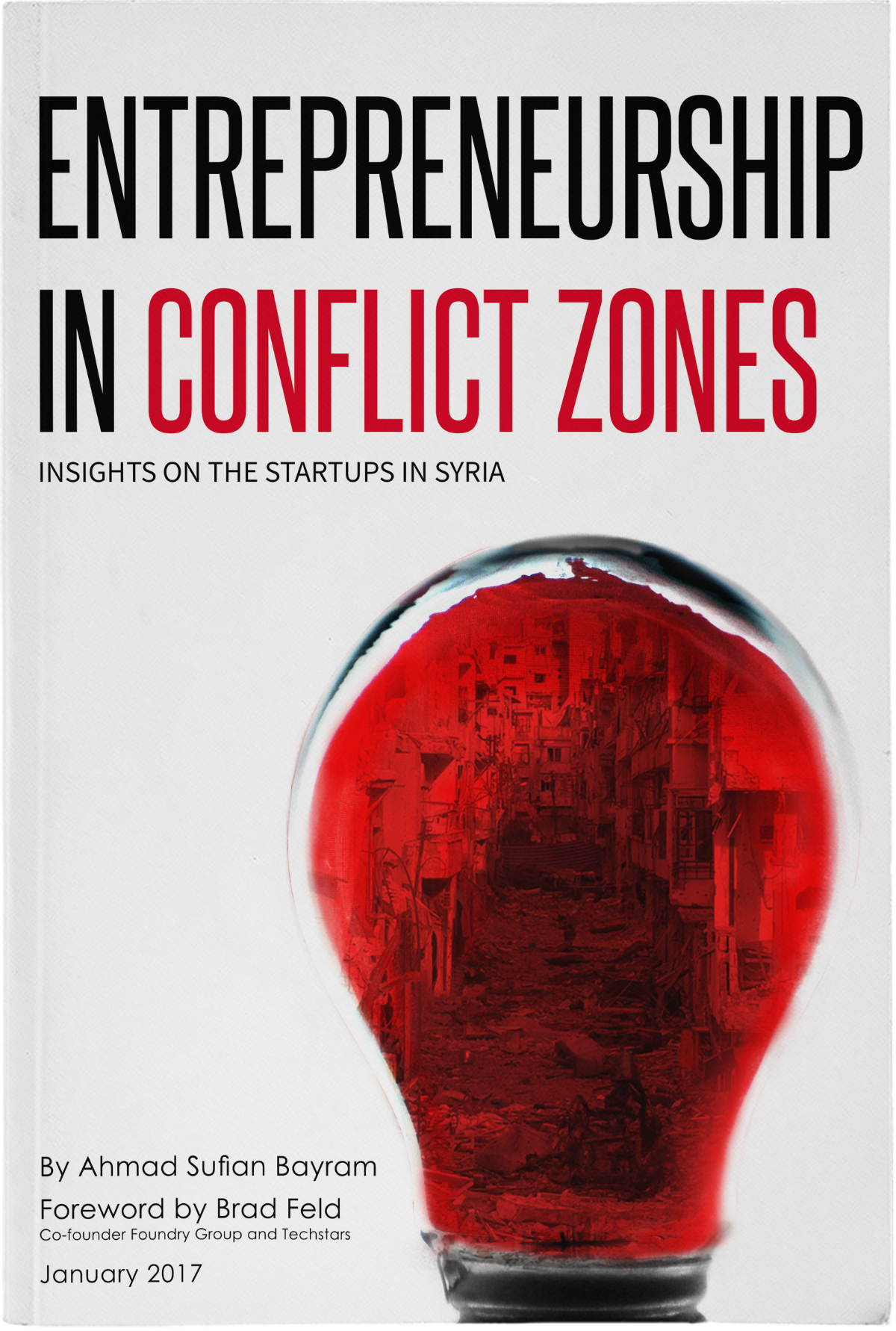
Entrepreneurship in Conflict Zones
Insights on the Startups in Syria
Download the Report
By downloading, you agree to receive occasional updates about our research
Entrepreneurship does not disappear during war.It becomes a lifeline.
Overview
After more than five years of armed conflict, Syria's economy, institutions, and labor markets were severely fractured. Yet amid insecurity, displacement, and economic collapse, a new generation of entrepreneurs continued to create startups, generate income, and serve their communities.
Entrepreneurship in Conflict Zones explores how Syrian founders operate under extreme conditions. It documents the realities of starting and running businesses amid political instability, sanctions, collapsing infrastructure, and shrinking markets. Rather than treating entrepreneurship as a post-conflict activity, the report argues that entrepreneurial activity during conflict plays a critical role in sustaining livelihoods, preserving human capital, and laying the foundations for long-term recovery.
What Is Inside
The 10 Core Challenges Facing Startups in Conflict Zones
A detailed analysis of the structural barriers confronting Syrian entrepreneurs, including insecurity, sanctions, financial scarcity, market access, and regulatory constraints.
Evidence from the Ground
Quantitative data and qualitative insights capturing how entrepreneurs experience conflict, adapt business models, and assess risk.
Case Studies of Resilience
Real examples of Syrian startups navigating destruction, relocation, and market fragmentation while continuing to innovate.
Women's Participation in Conflict Economies
An examination of how women entrepreneurs stepped into expanded economic roles during the conflict and the barriers they continue to face.
Policy and Programmatic Recommendations
Actionable guidance for governments, donors, NGOs, and ecosystem builders seeking to support entrepreneurship in fragile and conflict-affected contexts.