• Publications
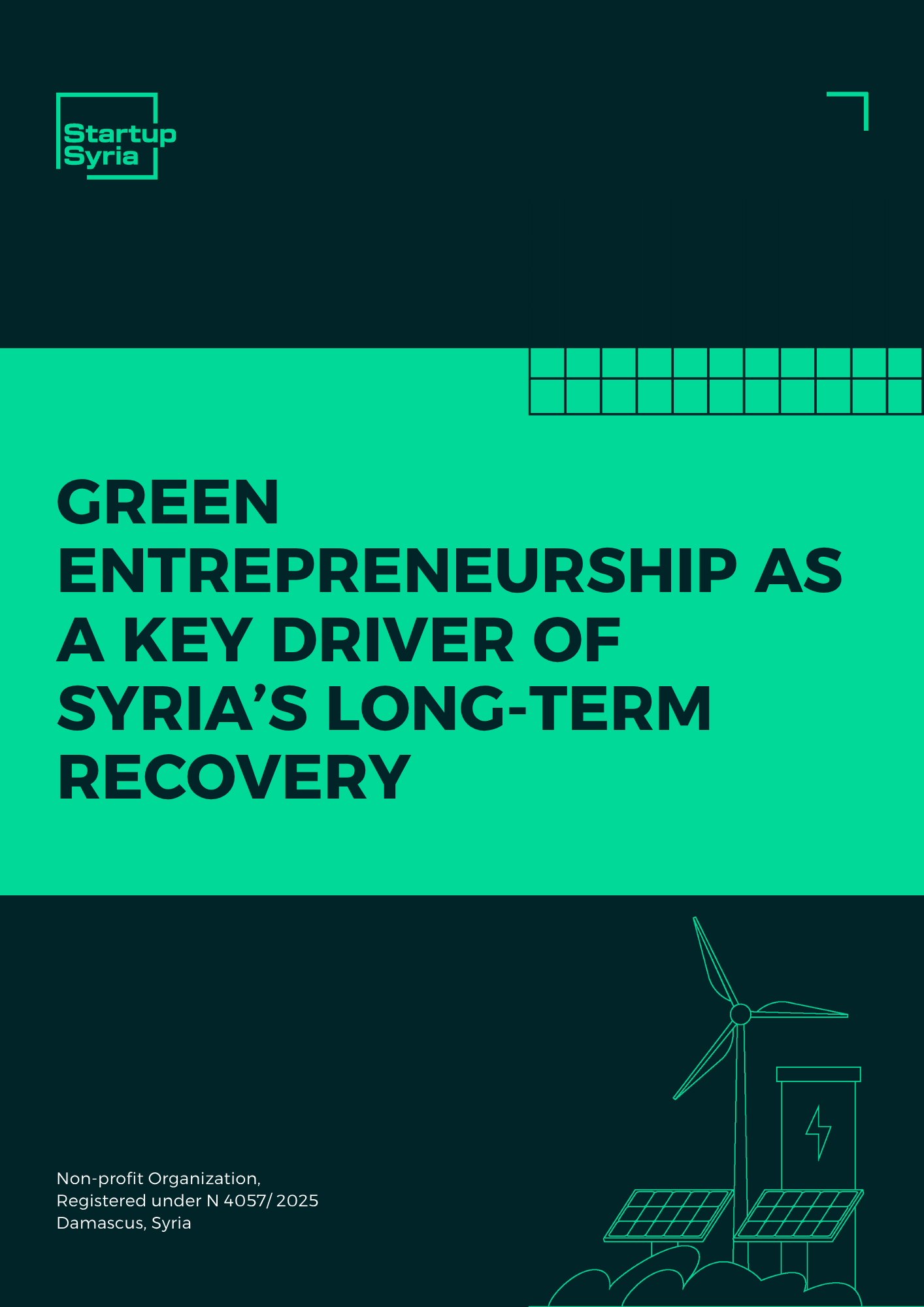
Green Entrepreneurship as a Key Driver of Syria's Long-Term Recovery
6 min readMay 2026
New research highlights how eco-friendly business models and renewable energy solutions can power sustainable reconstruction in Syria.
Damascus, 2025 – Startup Syria has released its latest comprehensive policy brief focusing on sustainable national reconstruction.
The report, titled Green Entrepreneurship As Key driver of syria's long term recovery.pdf, outlines how environmental business models can address the intertwined crises of high unemployment, energy insecurity, and heavy infrastructure damage.
Key Findings from the report
- •Over 3 million jobs have been lost in Syria since 2010.
- •An estimated 90% of Syrians live in poverty.
- •Between 17.6 and 28.3 million tons of rubble litter damaged cities, which can be recycled into concrete aggregate to replace up to 50% of natural aggregate.
- •Approximately $2 billion was committed to solar and renewable energy projects in 2025.
Top challenges facing green startups
- •Severe infrastructure gaps including uneven internet access and unreliable grid electricity.
- •International sanctions that restrict access to global tech, capital, and payment platforms.
- •Limited financial instruments and a critical lack of early-stage seed funding.
- •Skill gaps in business planning, marketing, pitching, and digital literacy.
Supporting green entrepreneurship in Syria cannot be an afterthought, but a strategic necessity for donors and policymakers who seek a durable and inclusive recovery for the country.
— Green Entrepreneurship Report
Recommendations
- •Establishing a national green strategy and a Green One-Stop Shop for streamlined licensing.
- •Launching a dedicated Syria Green Entrepreneurship Fund for grants and seed investments.
- •Developing donor-backed green loan products tailored for circular economy projects.
- •Setting up green innovation hubs linked to universities for specialized training.
- •Creating platforms for diaspora remote mentorship and targeted co-investment.
For more details on the green transition, please download the full report above.